BEIJING — The specimens had been in herbaria since the nineteenth century, collected in what is now Myanmar and Vietnam, and every one of them was filed under the same name: Drynaria coronans, a common epiphytic fern of tropical and subtropical Asia.
On 29 October a team from the Xishuangbanna Tropical Botanical Garden of the Chinese Academy of Sciences and Yunnan University published a paper in Phytotaxa describing what those specimens actually were. The species is Drynaria lineatisora, and its epithet describes the thing that gave it away: sori, the clusters of spore-producing structures on the underside of the fronds, that run in long unbroken lines rather than sitting in round dots.
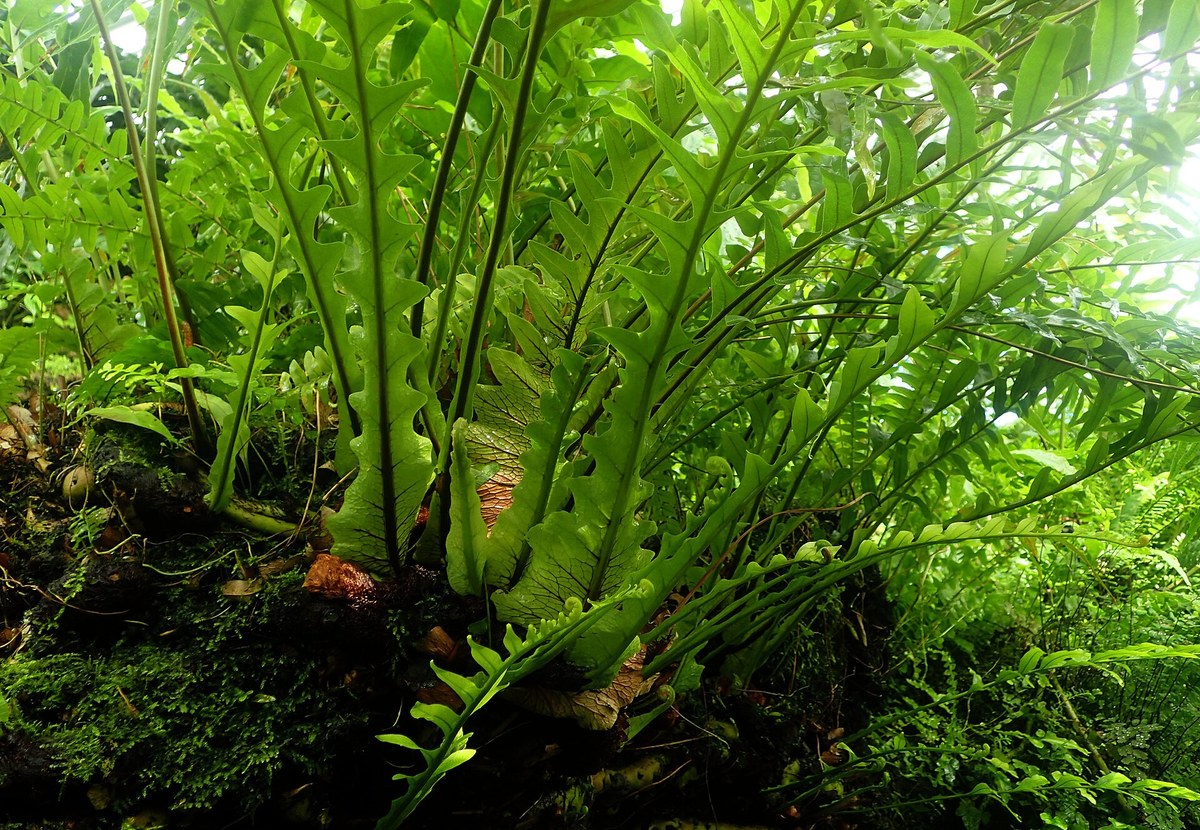
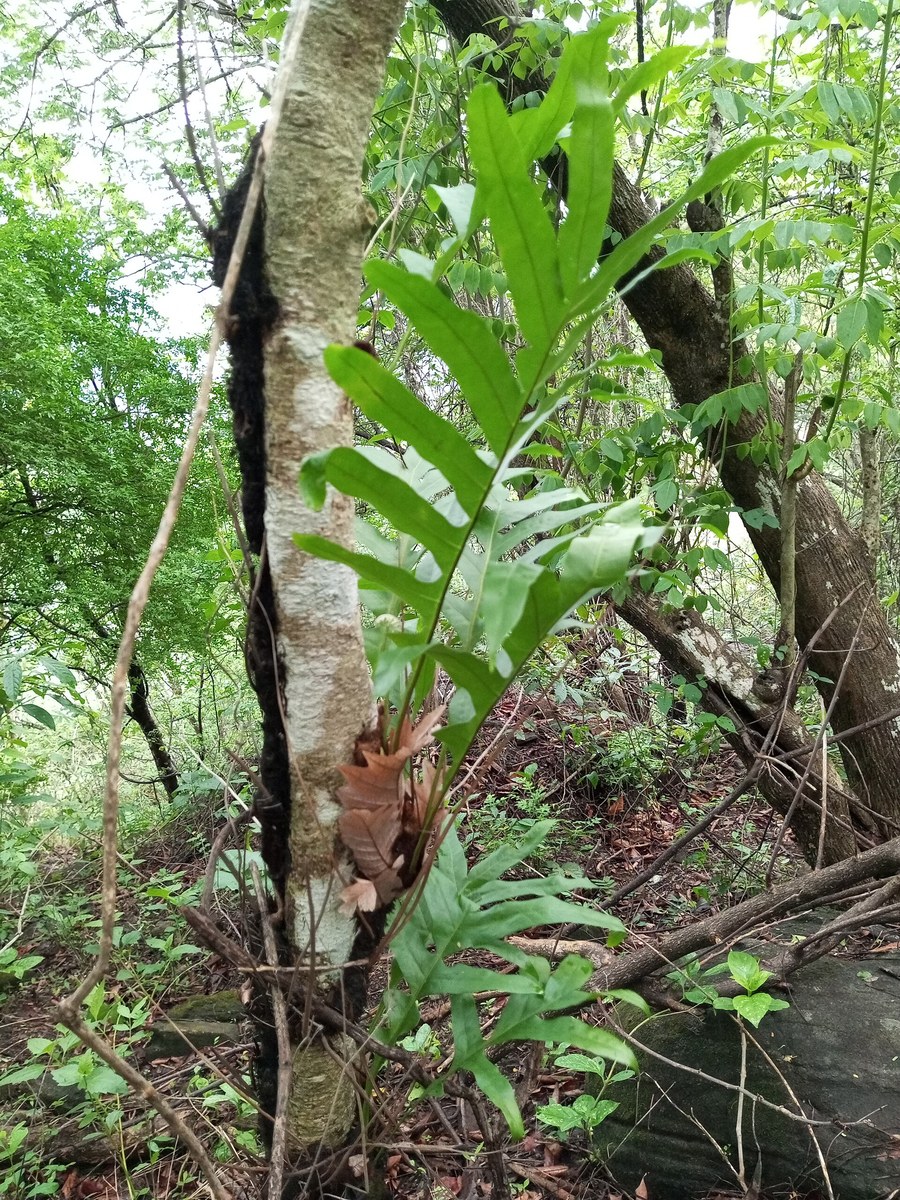
The morphological case is a list of small decided differences. In D. coronans the sori are orbicular or short-linear and sometimes merge as they mature; in the new species they are consistently elongate-linear and continuous, reaching up to 20 millimetres. The scales that cover the rhizome differ too: dark brown and lanceolate with shortly spinulose-denticulate margins, against pale yellow and long-linear with long-ciliate margins in the lookalike. The fern grows as the genus does, epiphytically on tree trunks, with the two kinds of frond that Drynaria ferns produce — the nest fronds that collect leaf litter and humus against the trunk, and the upright fronds that carry the spores.
Scanning electron microscopy settled the spores. Those of D. lineatisora are densely covered with fine, sharp spines about one micrometre long; those of D. coronans are smooth. On a light microscope, two ferns that look alike; on an electron microscope, one of them is a burr. The authors combined that surface ornamentation with the scale anatomy and the sorus architecture, and then tested the result against DNA.
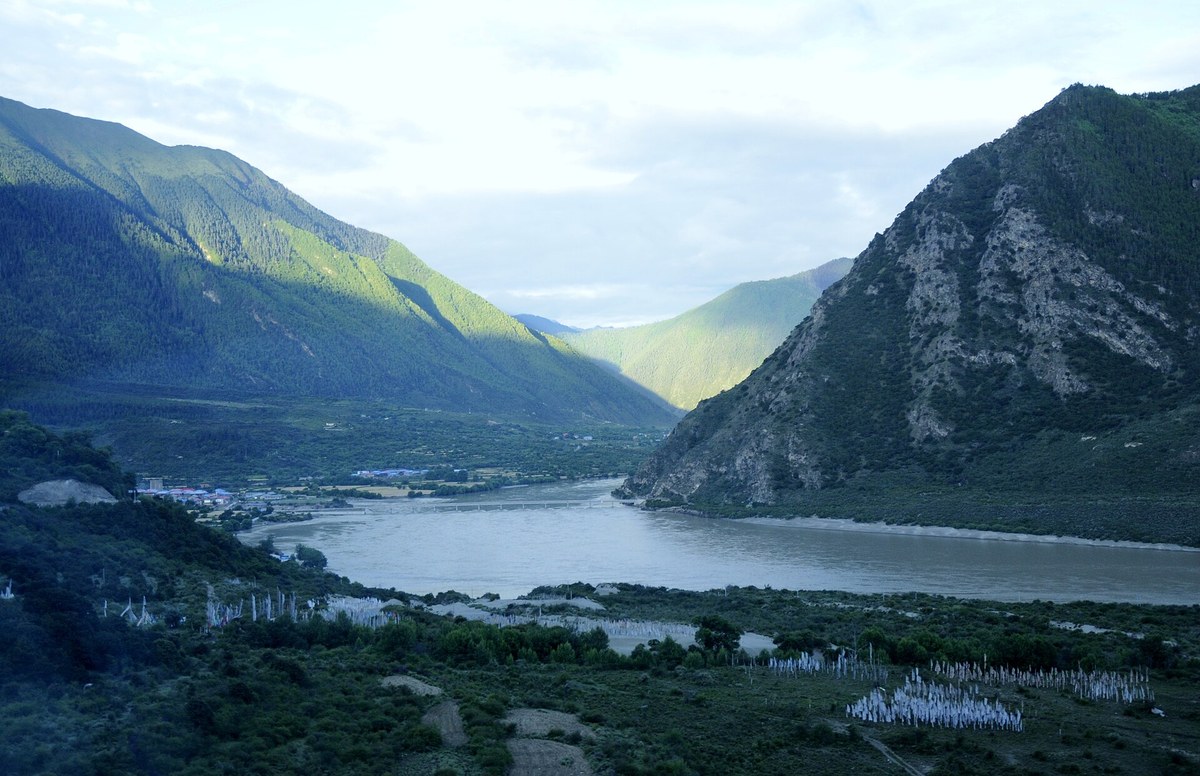
The range is narrow and disjunct, which is part of why it took so long. The species is known from relatively high mountains along the southern margin of the Himalaya, between 840 and 2,400 metres: Medog County in Xizang, where the type specimen was collected at about 1,120 metres in tropical broad-leaved forest, and populations in northern Myanmar and northern Vietnam.
Nothing is recorded from the space between, so the species is not a continuous Himalayan belt but a set of separated mountain populations, in three countries, in terrain that is difficult to survey and, in places, difficult to reach at all.
DNA analysis of 84 chloroplast genes confirmed the separation and put the new species in a different evolutionary lineage from D. coronans. That matters for a genus whose taxonomy has been unstable: Drynaria has been merged with Aglaomorpha and split again, and the Checklist of Ferns and Lycophytes of the World listed 34 accepted species as of October 2026, with this one added. A chloroplast genome comparison in this genus is not a formality; it is how a morphological hunch becomes a species.
Why was it missed? The authors give three reasons, and all three are ordinary failures of practice rather than exotic ones. Early specimens were scarce and often lacked rhizomes, and without a rhizome the scale morphology cannot be examined at all. Some D. coronans specimens have fused sori that produce intermediate forms, so a botanist keying out a single sheet could land on the wrong side of the line.
And much of the work was done on herbarium material without field surveys, which is to say without seeing whether a population varies. “Although we were unable to conduct field surveys of other recorded populations, our extensive fieldwork across several townships in Medog County has now confirmed that hundreds of individuals in this region consistently exhibit the elongate-linear sori characteristic of D. lineatisora,” said Jiang Liju of XTBG. “This finding supports the independence of the species.”
The discovery is a small event with a large implication, and the implication is not that botanists are careless. It is that a name can function as a container. Drynaria coronans was not wrong about the plants it described; it was wrong about how many kinds of plant were inside it, and the error survived because the organism is a fern that grows on trees in mountains that are hard to walk through, and because the two species look alike until you look at the sori, the scales or the spores. Conservation follows taxonomy: a species that has not been named cannot be assessed, listed or protected, and this one is spread across three countries' borders, none of which can secure it alone.
The researchers' own conclusion is dry — that the discovery adds a branch to the fern family tree and shows how much biodiversity may still be hidden in remote mountain regions. It is also, two hundred years after the first specimen was collected, a reminder that the drawer labelled common is where the uncommon waits.
• Paper: Jiang, L.-J., Zhao, J., Ma, D.-N., Wang, W.-G., Xi, H.-C., Sen, Y., Ma, X.-D., Zuo, X., Shen, J.-Y. and Zhou, X.-M. (2026), “Drynaria lineatisora (Polypodiaceae), a long-overlooked new species from China, Myanmar and Vietnam based on morphological and molecular phylogenetic evidence,” Phytotaxa 782(2), published 29 October 2026, DOI 10.11646/phytotaxa.782.2.6. Abstract read at phytotaxa.mapress.com; the full description is behind a subscription.
• Confirmed figures: sori elongate-linear and continuous, up to 20 mm, against orbicular to short-linear in D. coronans; spores with spines about 1 µm long; elevation 840–2,400 m; type locality Medog County, Xizang, about 1,120 m in tropical broad-leaved forest, epiphytic on trunks; also northern Myanmar and northern Vietnam; 84 chloroplast genes analysed.
• Attributed, not asserted: the reasons the species was overlooked, including the problem of rhizome-less specimens and fused sori producing intermediate forms, are the authors' explanation as given in the CAS release. The Jiang Liju quotation is from that release, translated from the Academy's English text. The count of 34 accepted species in the genus is the Checklist of Ferns and Lycophytes of the World as of October 2026.
• Not established: how many individuals exist outside Medog County, since the authors say they could not survey other recorded populations; any conservation assessment, which has not been published; and whether the Vietnamese and Myanmar populations are genetically identical to the Chinese ones. The “nearly 200 years” refers to the age of the earliest collections, not to the date of description.
• Jiang et al., “Drynaria lineatisora (Polypodiaceae), a long-overlooked new species…”, Phytotaxa 782(2) — phytotaxa.mapress.com · DOI 10.11646/phytotaxa.782.2.6
• Chinese Academy of Sciences, “New Fern Species Discovered After Nearly 200 Years of Being Mistaken for Another,” 27 November 2026 — english.cas.cn
• Xishuangbanna Tropical Botanical Garden, same release, 26 November 2026 — en.xtbg.ac.cn
• Phys.org, “New fern species discovered after nearly 200 years of being mistaken for another,” 27 November 2026 — phys.org
Images: Wikimedia Commons — Aglaomorpha coronans (the lookalike, CC BY-SA 4.0); a Drynaria fern on a tree trunk (CC BY-SA 4.0); the Yarlung Tsangpo valley in Nyingchi (CC BY-SA 3.0). No photograph of the new species is reproduced here; the paper's own figures are copyrighted.
[심층 탐사] 200년 동안 남의 이름으로 불린 양치식물 — 메독에서 확인된 드리나리아 리네아티소라
중국과학원 시솽반나 열대식물원 연구진이 19세기부터 미얀마와 베트남에서 채집됐지만 계속 드리나리아 코로난스로 오인돼 온 양치식물을 신종 드리나리아 리네아티소라로 정식 기재했다. 길게 이어진 선형 포자낭군, 짙은 갈색 인편, 1㎛ 가시로 덮인 포자가 구별점이다. 논문은 2026년 10월 29일 *Phytotaxa*에 실렸고, 중국과학원이 11월 26~27일 연구 성과를 공개했다.
Korean Version: [심층 탐사] 200년 동안 남의 이름으로 불린 양치식물 — 메독에서 확인된 드리나리아 리네아티소라
Socko/Ghost