SHANGHAI — The notice runs to four paragraphs and names nobody in full. On 26 November the Shanghai Branch of the Chinese Academy of Sciences published its findings on a paper that had been retracted from Nature, identifying its authors only by surname: Wang, Chen, Yu, He, Zhang. The paper, “Release of a ubiquitin brake activates OsCERK1-triggered immunity in rice,” appeared on 15 May 2024 and described how a rice plant releases a molecular brake so that its immune receptor can fire.
Its corresponding authors, in the published record, are Zuhua He, Yu Zhang and Ertao Wang of the CAS Center for Excellence in Molecular Plant Sciences; its first author is Gang Wang. The notice is short because what it establishes is narrow, and the gap between that narrow finding and the size of the question is the story.
The timeline in the notice is specific. In May 2026, during a self-review of the group's papers, the corresponding author found data anomalies in this one and on 7 June submitted a correction request to the journal. In late July the group found further duplicated images and data, and the first author was unable to provide some of the original experimental data; on 3 August it submitted a retraction request.
On 20 August the journal agreed to an author-initiated retraction, and the notice adds, in parentheses, that the retraction information had not yet been formally published. It still had not been, as of the notice's own date. On 23 September a well-known Chinese scientific-integrity blogger released a video alleging duplicated data and images in the paper and reported it to the National Natural Science Foundation; on 24 September the journal's page still showed the paper as an ordinary article.
The finding itself is a list. After examining the raw data and laboratory records and taking expert assessment, the investigation concluded that the paper contains one duplicated image and seven tables that used untrue data, that these resulted from the first author's misoperation or modification of experimental data, and that the first author therefore committed academic misconduct.
The main corresponding author, it says, failed in his duty to check the authenticity of the data his team supplied. That is the whole of the technical finding: eight items, one person's conduct, one supervisor's omission. The notice does not say which figures or which conclusions are affected, and it does not say whether the paper's central claim — that the E3 ligase OsCIE1 acts as a brake on the receptor kinase OsCERK1, and that chitin-triggered phosphorylation of OsCIE1 releases it — survives.
The sanctions are administrative and professional rather than legal. Under the rules on investigating and handling research-integrity failures, the main corresponding author was removed from his post as deputy director of the centre's Laboratory of Plant Efficient Carbon Sink, given a formal integrity admonition, and barred for 12 months from promotion, from awards and honours, and from recruiting graduate students or postdoctoral fellows.
Three others — the two other corresponding authors still at the centre and one of the co-first authors — received integrity education and warnings. The first author left the centre in July 2024, when his postdoctoral term ended, and the centre says it has formally notified his present employer. Chinese media have reported that he took up a professorship at a university in Fujian; the notice itself does not name the institution, and the university has not been reported as having announced any action.
Why the paper mattered is worth stating plainly, because retractions of important work get read as retractions of the field. The 2024 paper proposed a mechanism for one of the hardest trade-offs in plant biology: a plant must run an immune system strong enough to stop infection, and quiet enough to let beneficial fungi in and to keep growing. OsCERK1 is the receptor kinase at the centre of that signalling; OsCIE1 is the brake.
A paper that explains how the brake is released is a paper other labs build on, and this one has been cited dozens of times. The institutional finding does not declare the mechanism wrong. It declares that the data in one image and seven tables were not what they purported to be — which is a narrower charge, and a more damaging one for anyone who has been citing it.
What the notice leaves unaddressed is the machinery around the finding. Chinese research-integrity investigations are conducted by the institution, under rules issued by the academy and the ministries, and their penalties are employment penalties: a title removed, a year of eligibility suspended. There is no independent regulator to appeal to and no public hearing, and the convention of anonymising names by surname — 王某, 何某某 — means the notice cannot be matched to a personnel record by anyone outside the institution, even though the paper itself is public and its authors are named on it.
Meanwhile the journal's retraction notice, the document that tells the literature what to stop citing, was still pending more than three months after the journal agreed to it. A reader who finds the paper today sees a normal article with a working DOI.
Set out end to end, the case shows a system that worked in one direction and stalled in another. The group found its own problem before a public accusation, requested a correction and then a retraction, and the institution investigated and published a finding with named categories of sanction. What did not happen, yet, is the step that reaches the scientific record. Until the retraction notice appears, the citation stands, the PDF downloads, and the only public statement that the data were untrue sits on a provincial academy's notice board in Chinese, in a country where the people in the field will read it and almost nobody else will.
The eight items — one image, seven tables — are exactly the kind of failure that raw-data retention policies and figure-assembly checks are supposed to catch before publication. The notice says the centre will strengthen both. That is the part of the story that can be verified; the rest waits on a journal.
• Documents: CAS Shanghai Branch, “情况通报” (notice on the Nature retraction case), 26 November 2026 — read in full at shb.cas.cn. Paper: Wang, G. et al., “Release of a ubiquitin brake activates OsCERK1-triggered immunity in rice,” Nature 629, 1158–1164 (15 May 2024), DOI 10.1038/s41586-024-07418-9. Authors and corresponding authors are as listed in the publication record.
• Confirmed by the notice: one duplicated image; seven tables using untrue data; misconduct found against the first author; the main corresponding author failed in his verification duty; sanctions — removal from deputy-director post, integrity admonition, 12-month suspension of promotion, awards, graduate and postdoc recruitment; three others warned; first author notified to his new employer.
• Confirmed by the record: publication 15 May 2024; correction request 7 June 2026; retraction request 3 August 2026; journal agreed 20 August 2026; retraction notice unpublished as of 26 November 2026. A whistleblower video appeared on 23 September 2026, and the journal page still showed a normal article on 24 September 2026 (per Chinese media reports of those dates).
• Attributed, not asserted: the first author's move to a university in Fujian is from Chinese media, not the notice; the notice names no institution. The notice uses surnames only, so this article's use of full author names is taken from the published paper, not from the institution.
• Not established: which figures and conclusions are affected; whether the OsCIE1–OsCERK1 mechanism is withdrawn; whether the employer took any action; whether funding or prior hiring decisions are being reviewed. The notice does not say, and no further official statement was found.
• 中国科学院上海分院, “情况通报”, 26 November 2026 — shb.cas.cn
• Wang, G., Chen, X., Yu, C. et al., Nature 629, 1158–1164 (2024) — doi.org/10.1038/s41586-024-07418-9
• The Paper (澎湃新闻), “中科院上海分院通报'Nature期刊论文撤稿争议'”, 26 November 2026 — thepaper.cn
• Lianhe Zaobao, “中科院通报《自然》论文撤稿争议 认定存在学术不端”, 27 November 2026 — zaobao.com.sg
• Beijing Daily, “中国科学院上海分院就一论文撤稿事件发情况通报”, 26 November 2026 — bjd.com.cn
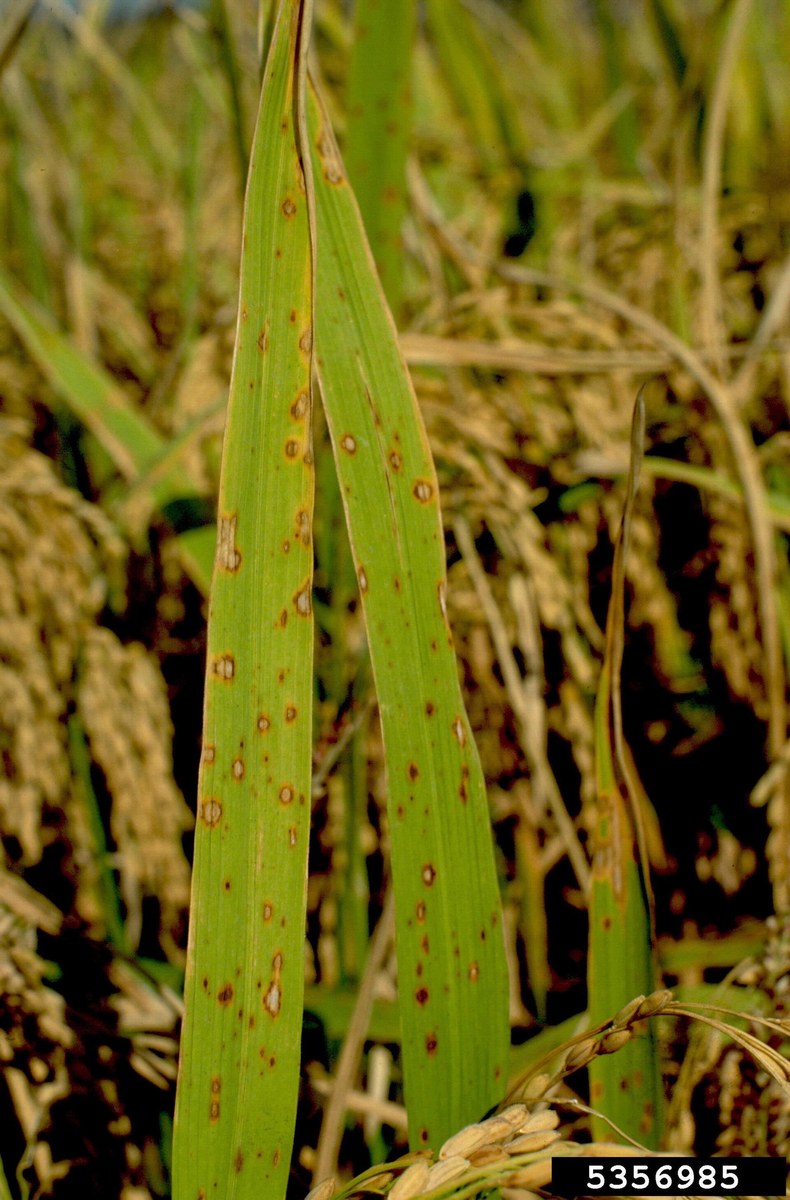
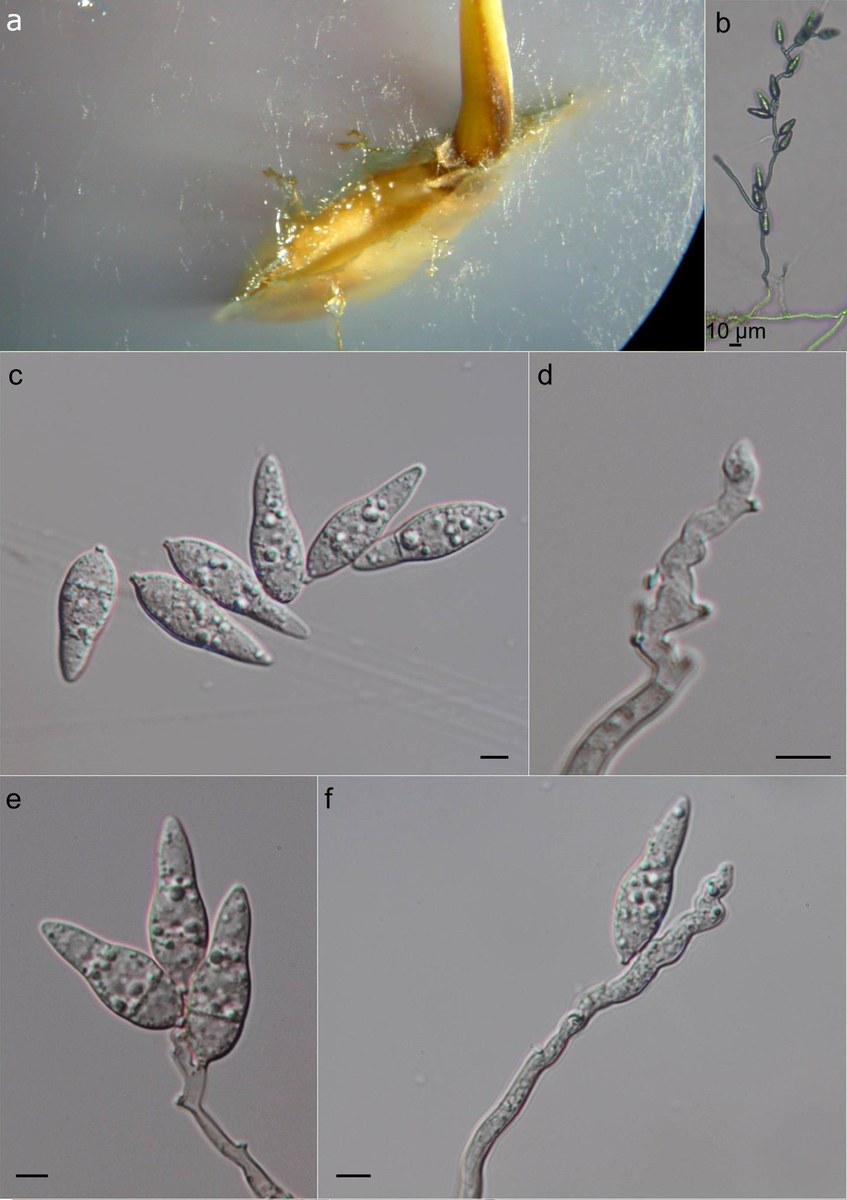
Images: Wikimedia Commons — rice paddy on Ganghwa Island (CC0); rice leaf lesions (CC BY 3.0 US); Pyricularia oryzae conidia (CC BY 4.0). The affected figures are not reproduced here.
[심층 리포트] 그림 한 장, 표 일곱 개 — 중국과학원이 네이처 벼 면역 논문에 내린 결론
중국과학원 상하이분원이 11월 26일 네이처 논문 철회 사안에 대한 조사 결과를 발표했다. 2024년 5월 실린 벼 면역 논문에서 그림 1장의 중복과 표 7개의 허위 데이터가 확인됐고, 제1저자의 학술 부정행위가 인정됐다. 주요 교신저자는 연구실 부주임직에서 해임되고 12개월 승진·수상·학생 모집 자격 정지 처분을 받았다. 다만 학술지의 공식 철회 공고는 11월 26일까지 게재되지 않았다.
Korean Version: [심층 리포트] 그림 한 장, 표 일곱 개 — 중국과학원이 네이처 벼 면역 논문에 내린 결론
Socko/Ghost


