XI'AN, China — The deposit measured 40 by 30 by 10 centimetres: a semi-organised heap of corroded iron on the southern floor of a tomb chamber, lifted out in three blocks of sediment. It held at least 200 larger fragments of scales, a large volume of tiny pieces and iron powder.
In a paper published in Antiquity on 26 November, Michael Charlton of the Institute of Archaeology at University College London, Wenbin Shao of the Emperor Qin Shihuang's Mausoleum Site Museum and colleagues argue that the heap is one garment: a corselet of between 800 and 1,200 iron scales, and probably the earliest complete iron scale-armour corselet yet found in China.
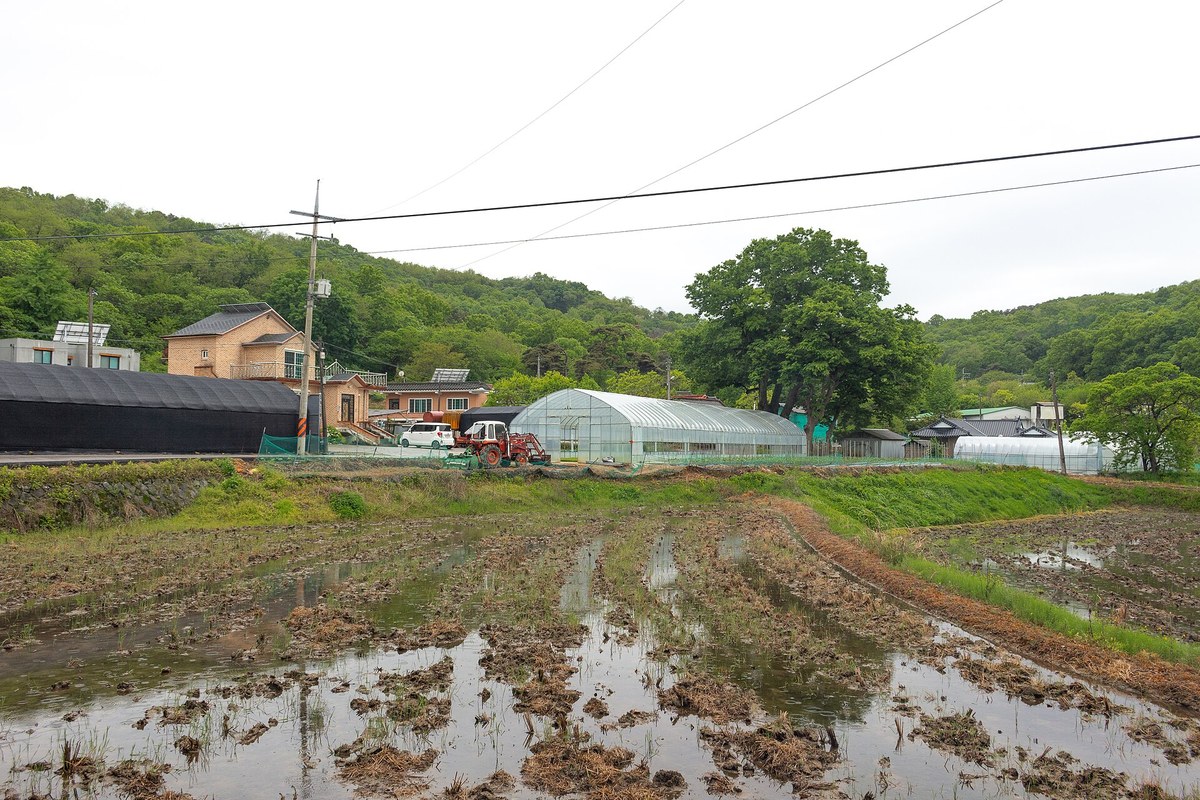
The tomb is M1, the third of nine large tombs that run west beyond the outer enclosure of the First Emperor's mausoleum, excavated between 2013 and 2023. Its occupant is unknown, but the position alone implies rank: the dead were buried inside the complex of Qin Shihuang, within a line of tombs large enough to have required imperial permission.
The main chamber has been reported at about 1,900 square metres, roughly 15.6 metres below ground. The scales are thought to have fallen from a shelf when the chamber's ceiling collapsed, which is why they survived as a group rather than as scattered scrap. Iron swords were also recovered from the tomb.
The reconstruction rests on arithmetic as much as on metal. A helmet of this type in China uses 80 to 90 scales; a well-preserved Han iron corselet from Linzi in Shandong had 2,142. A count of 800 to 1,200 is too many for a helmet and too few for several separate items, and the irregular or triangular scales associated with helmets are absent. At about six grams a scale, plus lacing, the garment would have weighed around 10 kilograms — heavier than the 4 to 5 kilograms estimated for leather-scale corselets, and at the light end of the 10 to 25 kilograms recorded for metal ones.
The team studied 81 loose scales in detail and found three designs: the commonest a slightly convex rectangle of 33 by 29 by 1.5 millimetres weighing about five grams with ten holes along three sides; a larger type of about eight grams with eleven holes; and fragments suggesting a third, elongated fish-scale form.
Some scales still carry bright red, and elemental mapping showed mercury and sulphur together, which the authors read as cinnabar. A smooth black layer flaking from many pieces may be lacquer; the lacquer contains chromium, though the authors cannot say whether it came from the recipe or leached in from the surrounding soil. Unlike the later Han corselet from Linzi, which was gilded in silver and gold, the M1 armour shows no sign of gilding or inlay. What it does show is wear of the kind that follows use rather than display.
Five scales were sectioned and examined under optical and scanning electron microscopes. The surviving metal is ferrite and pearlite with a carbon content of 0.1 to 0.4 per cent by weight and grains of 10 to 20 micrometres — fine enough to indicate heavy forging. The authors conclude that the scales were made from mild steel forged into thin sheets, most likely from liquid cast iron decarburised in a fining process, with further decarburisation at the surface in the forge. The smiths made little effort to keep the carbon even: the result, in their words, was “a scale with soft edges and cores of variable hardness.” Energy-dispersive spectrometry found iron with no major alloying components.
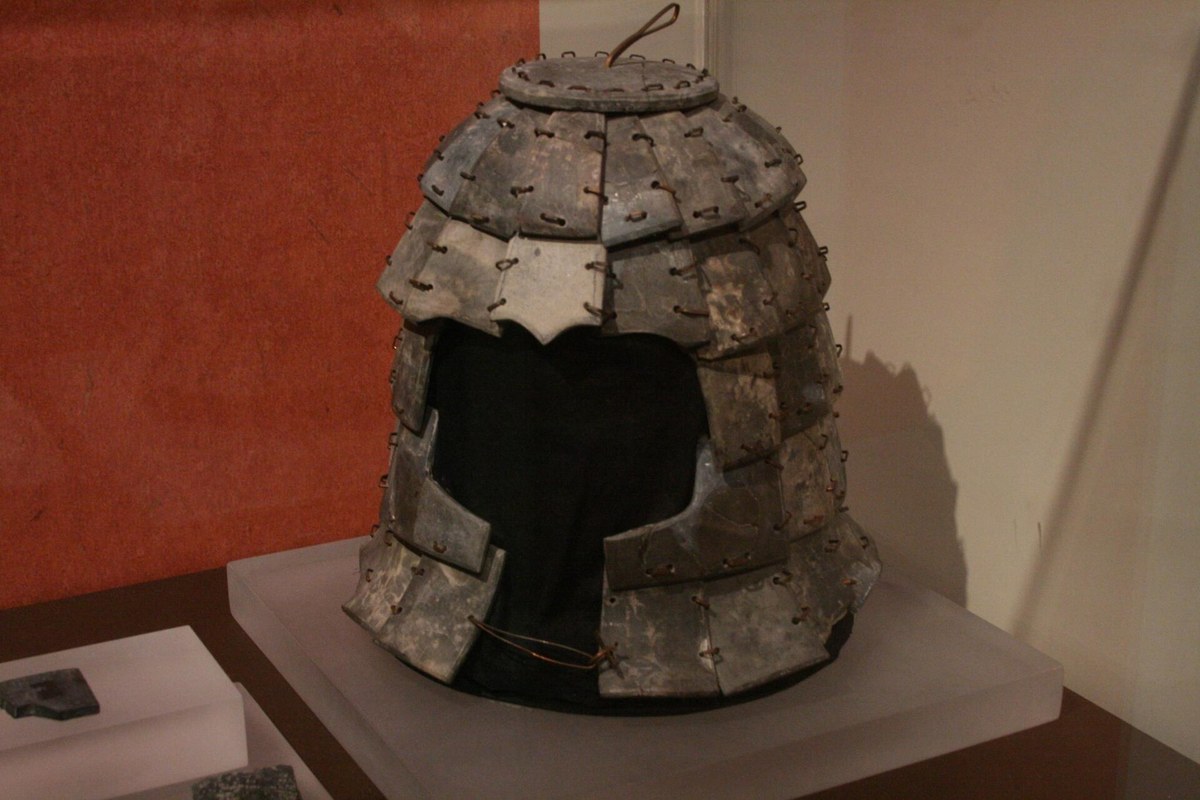
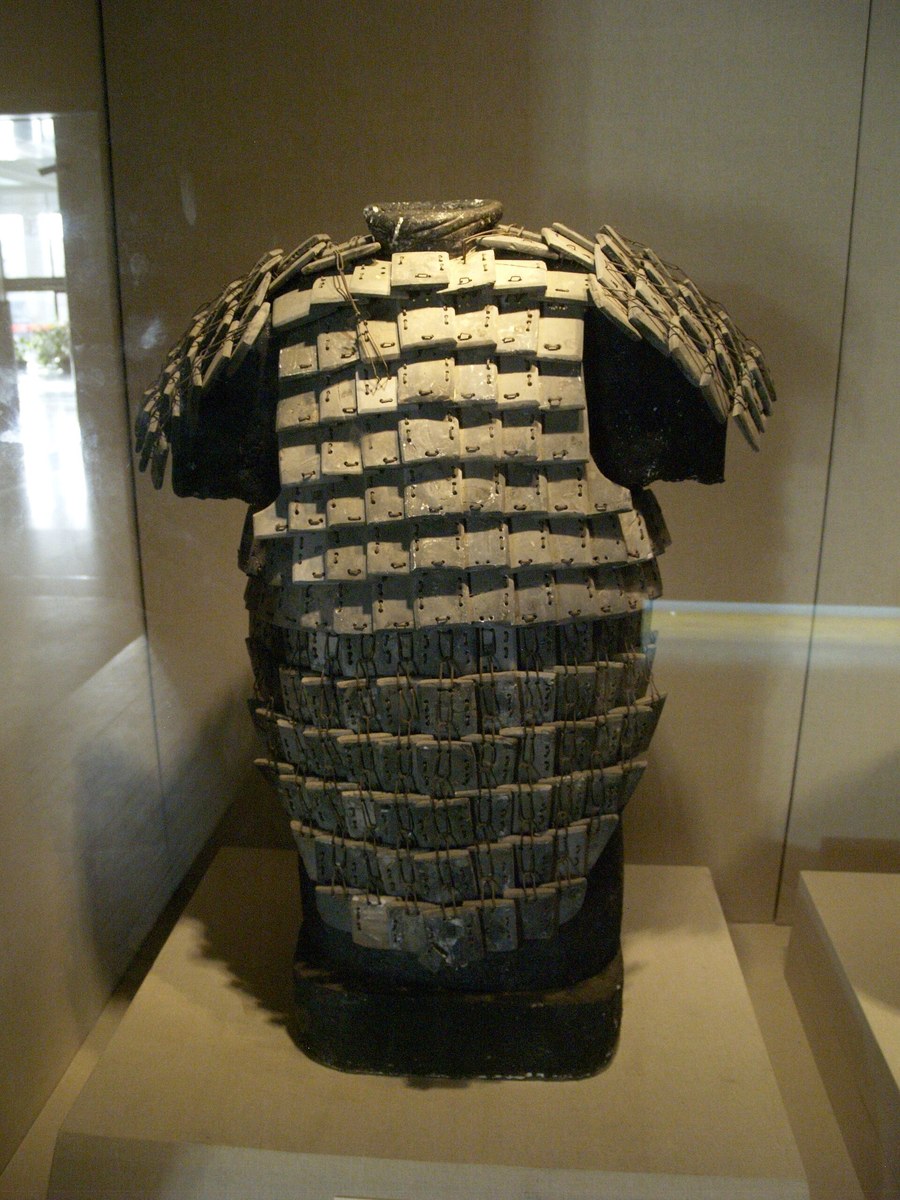
The find matters because of what else is in the mausoleum. Most of the clay scales on the terracotta warriors are brown and unpigmented, suggesting leather or rawhide, though smaller grey scales on some higher-ranking figures may have been meant to read as iron. Accessory pit K9801, the second largest in the complex, tells the opposite story: in the roughly one per cent excavated so far, archaeologists have recovered 87 stone corselets and 43 stone helmets, their scales laced with flattened copper wire.
The new paper notes that the stone scales closely resemble the M1 scales and concludes that “the stone scales emulate iron armour.” The terracotta figures, in other words, are dressed in the cheap material and the stone army in the expensive one's imitation.
The contradiction does not resolve. Tomb M1 held iron swords while the mausoleum held tens of thousands of bronze weapons; Sima Qian records an order to melt down weapons after unification, yet the Qin state ran an advanced iron industry and iron weapons appear in other late Qin burials. The authors lay out three possibilities — exceptional elite objects, an innovation in the process of adoption, or a truer picture of Qin armament than the bronze — and decline to choose.
Donald Wagner's argument that the mausoleum's bronze is symbolic rather than documentary is cited; so are the old regnal dates inscribed on weapons from Pit 1, which suggest old arsenal stock was used to equip the clay army. What the paper does establish is a supply chain. Cast iron was fined into steel, forged into sheets a millimetre and a half thick, punched with ten holes, and laced by the hundred into a garment that weighed as much as a machine gun. That is a workshop with standards, and it was working for the man who was burying an army of clay.
• Paper: Charlton, M., Shao, W., Bevan, A., Li, G., Jiang, W., Du, W., Feng, K., Xia, Y., Yang, Y., Li, X. and Wang, W. (2026), “Iron scale armour from the mausoleum of China's First Emperor and its wider context,” Antiquity, First View, pp. 1–17, published online 26 November 2026, DOI 10.15184/aqy.2026.10478. Read in full at Cambridge Core.
• Confirmed figures: deposit 0.40 × 0.30 × 0.10 m; at least 200 larger scale fragments; estimated 800–1,200 scales; about 6 g per scale; garment about 10 kg; comparison 80–90 scales per helmet, 2,142 scales in the Han corselet from Linzi, 4–5 kg leather corselets, 10–25 kg metal corselets; 81 scales studied in detail; type 1 33 × 29 × 1.5 mm, about 5 g, 10 holes; type 2 about 8 g, 11 holes; five scales sectioned; carbon 0.1–0.4 wt%; grains 10–20 µm; K9801: 87 stone corselets, 43 helmets, about 1% excavated.
• Attributed, not asserted: “a scale with soft edges and cores of variable hardness” and “the stone scales emulate iron armour” are the authors' words. That the corselet is the earliest known complete Chinese iron scale-armour corselet is their cautious conclusion (“likely”), not a finding of the excavation record. The mausoleum's chamber dimensions are as reported by press summaries, not taken from the paper text read here.
• Not established: who was buried in M1; whether the iron swords and armour mean the Qin army was iron-equipped or that these were elite objects; the source of the chromium in the lacquer; and whether any 3rd-century BCE Chinese smith could hold a consistent carbon content, which the authors explicitly say these did not.
• Charlton et al., “Iron scale armour from the mausoleum of China's First Emperor and its wider context,” Antiquity (2026) — cambridge.org · DOI 10.15184/aqy.2026.10478
• Archaeology News Online Magazine, “Earliest iron scale armor in China found near First Emperor's tomb,” 27 November 2026 — archaeologymag.com
• La Brújula Verde, “The Terracotta Warriors imitate leather armor, but a tomb in the same mausoleum yielded a cuirass made of a thousand iron scales,” 27 November 2026 — labrujulaverde.com
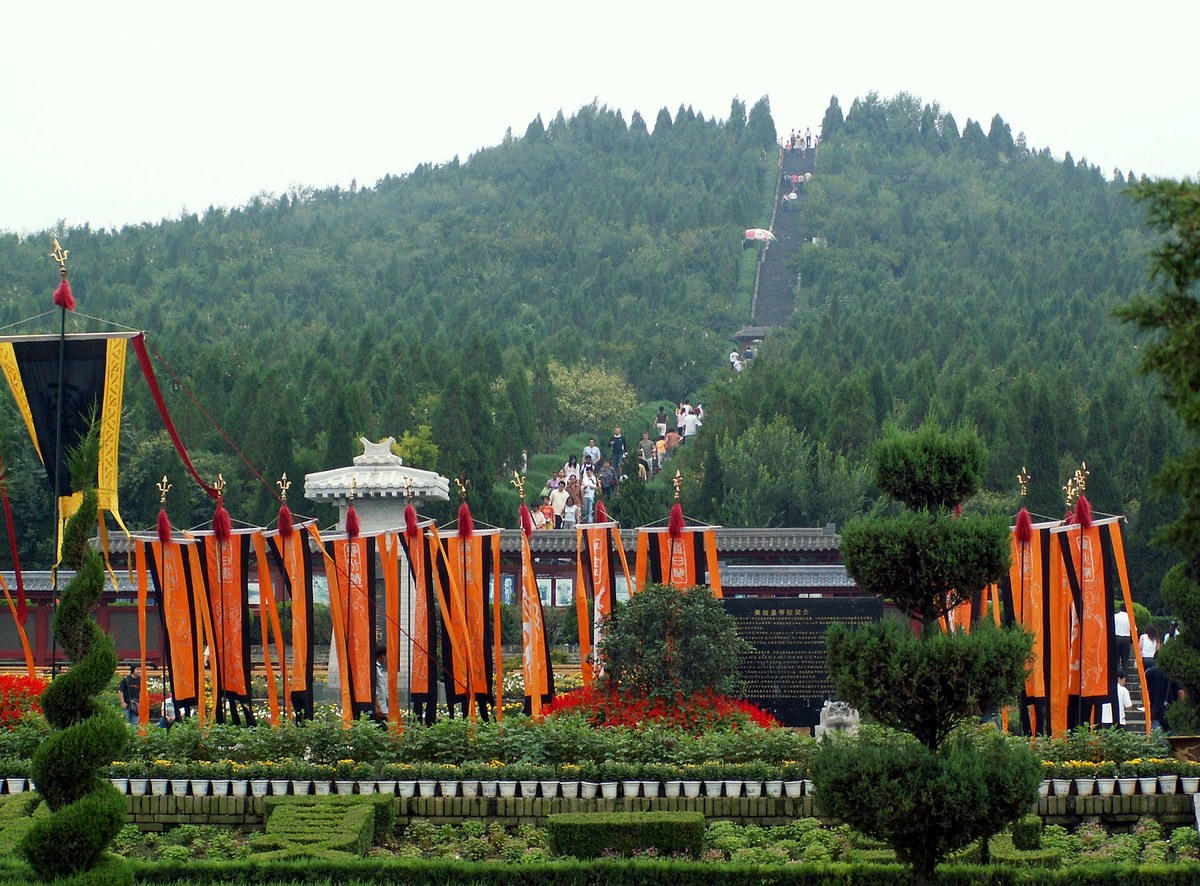
Images: Wikimedia Commons — stone helmet and stone corselet from pit K9801 (CC BY 2.0, CC BY-SA 3.0); the mausoleum mound outside Xi'an (CC BY-SA 2.0).
[역사 탐구] 800장의 연강, 10킬로그램 — 진시황릉 석갑이 흉내 낸 진짜 갑옷
중국 최초의 완전한 철제 찰갑으로 보이는 유물이 진시황릉 M1호묘에서 나왔다. 11월 26일 *Antiquity*에 실린 분석에 따르면 바닥에 흩어진 40×30×10㎝ 크기의 철편 더미는 800~1,200장의 비늘로 이루어진 한 벌의 갑옷이며, 탄소 0.1~0.4%의 연강을 두들겨 만든 무게 약 10㎏의 물건이다. 연구진은 같은 능역의 석제 갑옷 87벌이 바로 이 철갑을 모방한 것이라고 결론 내렸다.
Korean Version: [역사 탐구] 800장의 연강, 10킬로그램 — 진시황릉 석갑이 흉내 낸 진짜 갑옷
Socko/Ghost